



The Complete Guide to Modular Switches: Types, Uses & Buying Tips
May 13, 2026
How Regulators & Dimmers Help You Save Energy
September 30, 2026What Is a Switch Module & How Does It Work?
When designing the interiors of your home, one element that adds elegance to the feel of your home is the electrical switches. While the design aesthetics of these switches are important and often considered when buying them, the mechanism that you feel beneath your fingers – the smoothness with which it works – adds to the overall sophistication of your home interiors. As a meticulous interior designer or homeowner, you would probably go through several switches before you decide on one that blends into your design.
As laymen, we look at these switches only from the design perspective, but it makes sense to understand the technical aspect of these tiny yet important elements of the home.
When we select switches, we are looking at the whole unit and not only the switch modules.
What is a switch module?
The switch module is the internal unit in a modular switch system that controls the flow of electricity to an appliance by opening and closing the circuit. The visible switch (button/rocker) is part of the module that the user operates – the visible part. These switch modules work by connecting or disconnecting the internal contacts. Take a light switch, for instance, when the electronic switch is on, the circuit is completed, and the light turns on. When the switch is off, the circuit is open, and the light turns off.
When you press a switch, you are operating this module inside the switchboard.
What truly makes these switch modules stand apart from normal switches is their modular structure. Each unit – the rocker and the switch module – is a fully functional, distinct unit. This makes modern electrical switches more organised and easier to maintain.
It makes the electrician’s work super easy. The electrician simply assembles the modular switchboard – a frame within which one may fit these switch modules, modular sockets, and other types of accessories, like USB, TV points, a push button switch, and more – almost like putting together a jigsaw puzzle. The upgrade and replacement of these switches is also equally easy. The electrician simply replaces the faulty unit.
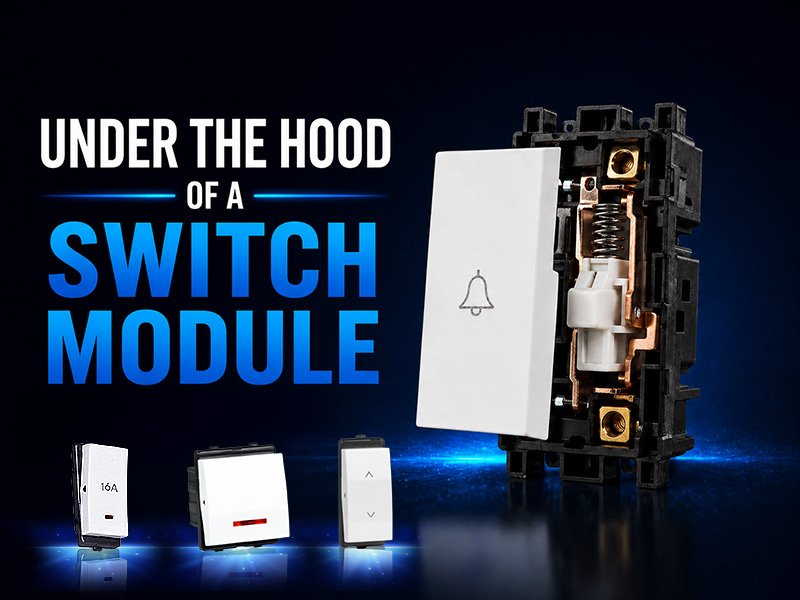
Structure of a Switch Module
A typical switch module consists of several parts:
- A rocker or button (the visible part you press)
- Internal metal contacts that carry electricity
- A spring mechanism to return the switch to its position
- Terminals where wires are connected
Fire-resistant plastic is typically used for the switch body. The internal parts are copper and other conductive metals, facilitating the smooth flow of electricity. For each part, high-quality materials are used for safety and durability.
How Does a Switch Module Work?
A switch module works by simply opening and closing an electrical circuit. This system enables you to set your fan in motion, turn on a light or switch on a connected appliance.
In simple terms, pressing the switch connects or disconnects the electrical path and may use sensors or digital control instead of only mechanical contact.
Types of Switch Modules Used in Homes
Modern homes use different types of switch modules depending on their function:
- One-way switch module for on/off control of appliances.
- Two-way switch module for facilitating on/off control from two different locations. It is especially useful in the bedroom and on staircases.
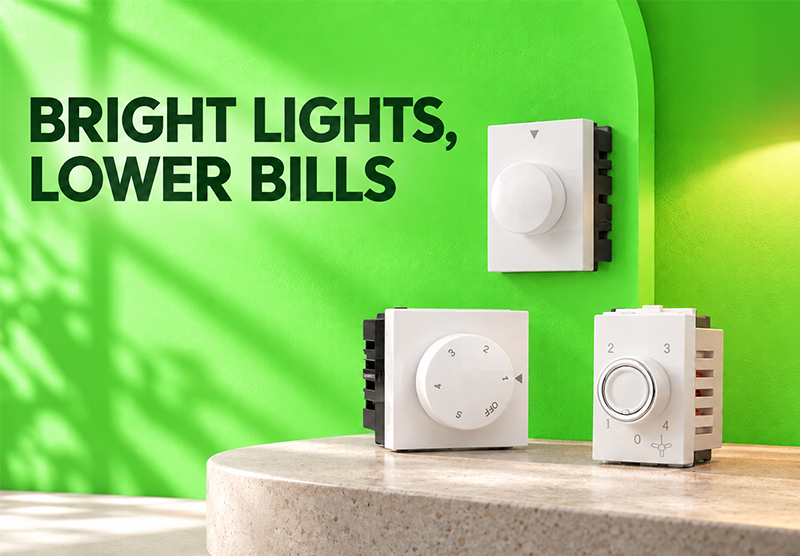
- Fan regulator module to control the speed of fans instead of just turning them ON or OFF.
- A push button switch works for a momentary connection, like for bells.
- The dimmer module enables adjustment of brightness, like for a chandelier.
- Smart or electronic modules, which are advanced electronic switch systems that can be controlled using apps and digital devices.
Each of these modules serves a specific purpose, making modern switches for your home more efficient and flexible. If you’re planning to upgrade your switches, take a look at this complete guide to modular switches. It’s a practical resource worth reading before you decide.
Advantages of Switch Modules
An important advantage is the flexibility a modular system offers. If you want to upgrade your switchboard, you need not replace the whole switchboard; you can simply remove and replace the components you want to change. The process saves time and effort and also saves costs in the long run.
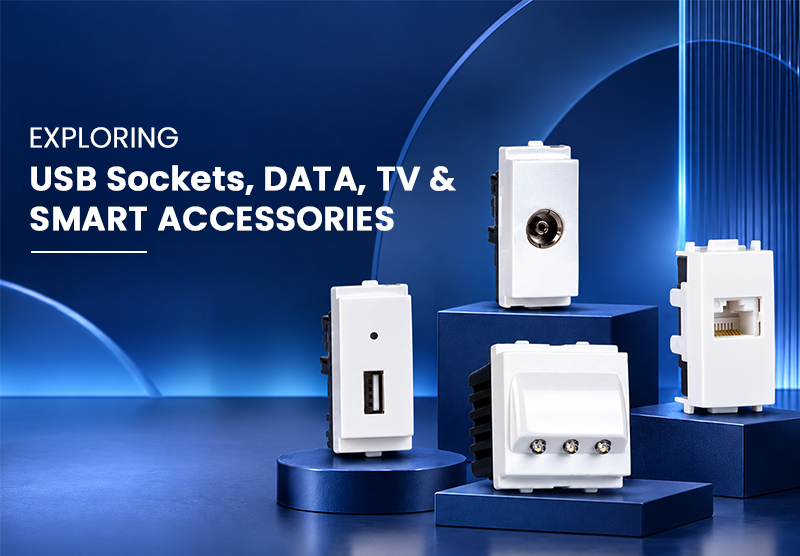
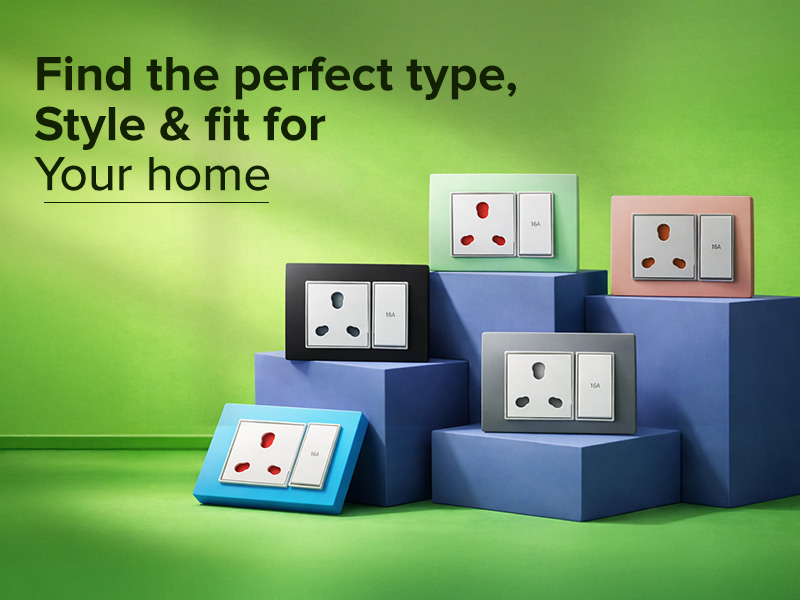
Take for instance, Precision Electrical’s premium Series 7, you can choose to upgrade the visible switch plates to match your interiors and in each plate, you can select what to fit, like a switch module, or a socket and a switch module, dimmers and fan regulators or other accessories, like a computer jack or a TV Co-Axial Socket.
Besides the ease of replacement and upgrades, other factors that make this a preferred choice for homes are:
- Safe to use
- Modern, elegant design
- Ability to mix and match various components into a single board
- Compatibility with smart home systems
- Durability
Applications in Modern Homes
Switch modules are used in almost every part of a house, be it bedrooms, kitchen, living room, staircases, or for the doorbell. Not just homes, these switches are usable even in commercial spaces.
While switches may seem like a minor detail, understanding how a switch module works helps you make smarter choices when designing your space and selecting switches for your home. By combining good design with reliable functionality, modular switches offer the perfect balance of aesthetics, performance, and convenience – making them an essential and standard part of any well-planned interior.
Explore our Precision Electrical’s< premium Series 7 switch modules
FAQ
You can use the push button switch for appliances or devices for which you need momentary control. For instance, in hospitals, as a call bell, or at homes for doorbells.
A push button is used for momentary control, but a normal switch, once turned on, remains in that position until it is turned off, and vice versa.
Commonly used switch modules for homes include the one-way switch module, the two-way switch module, the fan regulator, push button switches, and dimmers.
Yes, electronic switches are safe for daily use, especially the ones with ISI certification and from well-known brands. Their safety also depends on proper installation, correct wiring, and using them within their rated load capacity.
Yes, switch modules can help improve energy efficiency by providing better control over electrical appliances, reducing unnecessary usage, and enabling features like dimming, timers, and smart automation that prevent energy wastage.