



How Piano Type Switches Are Redefining Everyday Living Spaces
January 30, 2026
What Is a Switch Module & How Does It Work?
May 13, 2026The Complete Guide to Modular Switches: Types, Uses & Buying Tips
We hardly give it a thought when we use electrical switches in our daily lives, whether these are installed in a modern home or in a commercial space. These small components are part of our everyday life, enabling us to work around devices with ease – from switching lights on and off to powering important appliances.
In modern homes, electrical switches are more than just functional; they ensure safety, convenience, and add a touch of elegance to improve the overall aesthetics of the space. The newer modular electrical switches give greater control in the hands of homeowners in shaping the design and performance of their switchboards.
Whether you are building your dream home or simply renovating or upgrading, one must put great thought into designing their switchboard. To do so, one must understand the types of electrical switches available, their uses, and how to select the right option to suit one’s needs.
We have put together a complete guide to help you make an informed decision – one that you would not regret in the long run.
Let’s begin with the basics.
What Are Modular Electrical Switches?
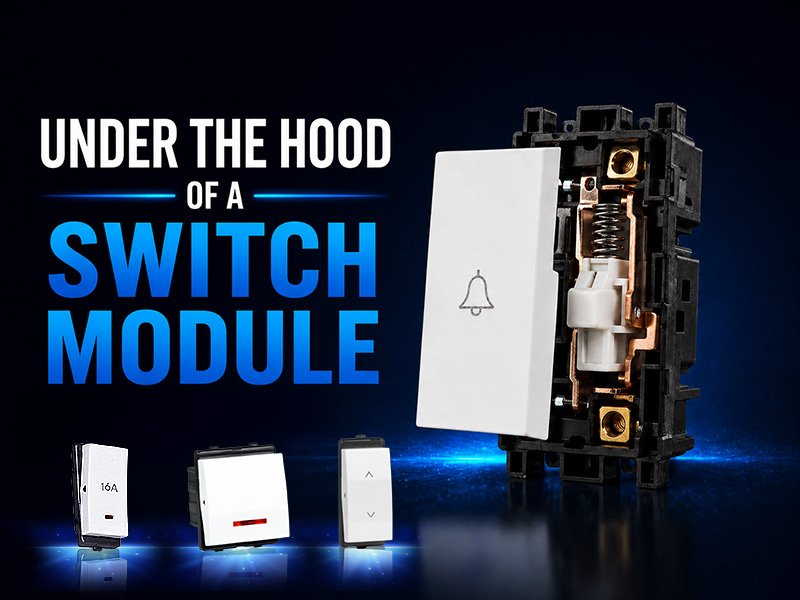
Modern electric switches are designed as individual modules or units, which can be fixed into a frame or plate, like a jigsaw. This completed frame or plate is a modular switchboard. Unlike traditional switches, these modular frames are easier to maintain, look much more stylish, and are more flexible.
Indian homes and offices have upgraded in terms of aesthetics, and there is now a growing demand for better interiors and smarter functionality. This demand has manifested into modular electrical switchboards becoming the preferred choice in home and office interiors and commercial spaces.
At Precision Electricals, one can easily find certified modular systems ready for customisation with options like switches, sockets, dimmers, and indicators. This makes it easier to design a setup that matches both your functional needs and interior aesthetics.
Here’s why it makes sense to choose these Modular switchboards:
- Added elegance to the modern interiors
- Better safety, better insulation
- Quick installation and replacement
- Durability
- Greater customisation
What types of electrical switches are available to customise your modular switchboard?
A modern switchboard is assembled – created by combining different types of electrical switches as per the usage, space, and convenience. The common types of electrical switchesavailable for the switchboard are:
- One-Way Switch – The most commonly used electrical switch, which enables the user to control the device from a single location
- Two-Way Switch – A sophisticated version of the normal one-way switch. It enables the user to control the same device from two different locations. These types of switches work really well in bedrooms and on staircases.
- Bell Push Switch – This switch works when pressed and is typically used for bells or any other devices where a temporary connection is to be established.
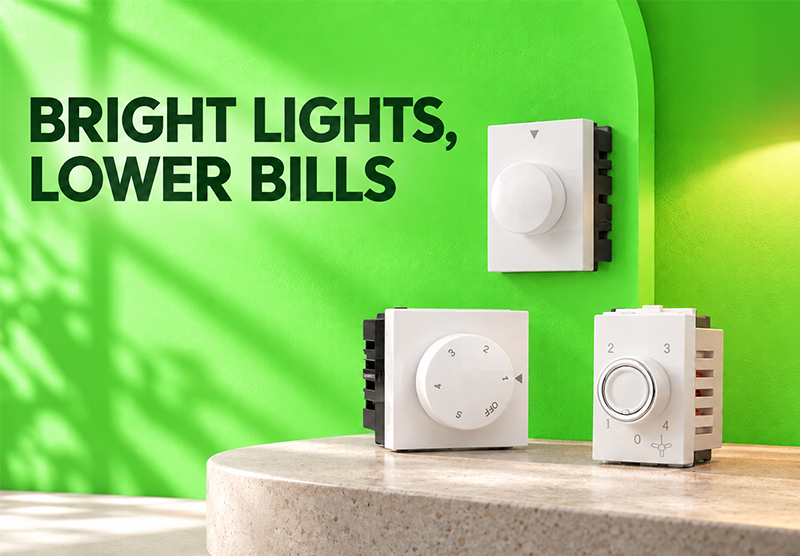
- Modular Dimmer Switch – This is a dial that you can turn and adjust the brightness of the lights as per your needs. It is suitable in spaces like the living room, which are often adorned with decorative lighting, like chandeliers.
- Fan Speed Regulator Switch – Again, a dial, which enables you to control fan speed.
Each of these switches has its own applicability in different rooms. For instance, the dimmers are great for controlling the lighting in living rooms or in auditoriums. Meanwhile, it is advisable to use moisture-resistant and weather-proof switches in kitchens and bathrooms.
Here’s a tip: dimmers and fan regulators can help reduce electricity consumption, making your home more energy-efficient.
How is the modern switchboard made?
Assembly. The right type of electrical switch and the required socket are selected and assembled into a switchboard frame. Each switch module performs a specific task. For instance, one switch will control the lights, another the fans, and yet another will be for the appliances.
As the name suggests, these switches are modular, and each component fits seamlessly into the switchboard frame. The modular design of the switchboard makes it easy to add, remove, and replace the components without the need for a complete switchboard replacement. Another benefit of the modular design is cleaner, more organised wiring, ensuring improved safety.
What are the Types of Sockets available?
A switchboard is incomplete without a socket. These sockets are designed to safely connect your appliances to a power source. However, the safety and performance of your appliance will depend on the selection of the right type of socket.
Here’s a list of the types of modular switch sockets available:
- 2-Pin Socket can be used for low-power devices, like mobile chargers and small electronics.
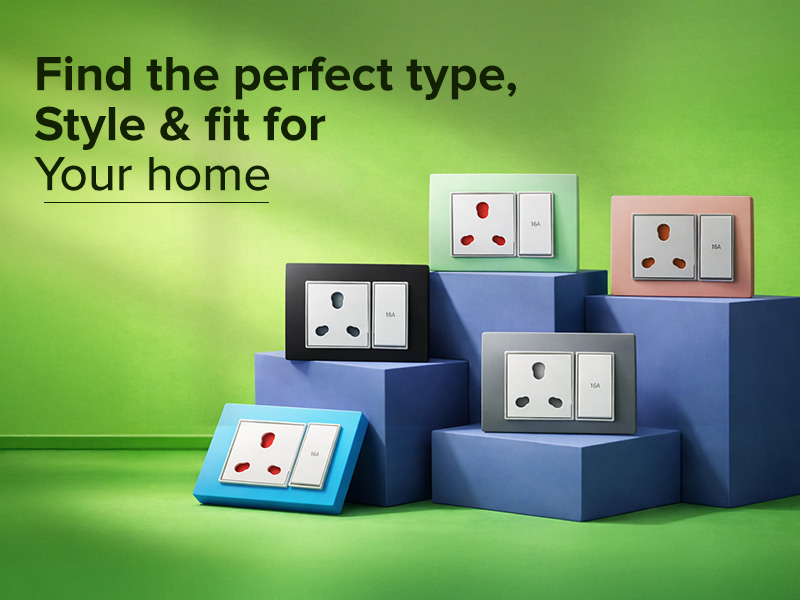
3-Pin Socket, which includes earthing (an essential safety requirement), and can be used for large appliances, like TVs, refrigerators, and washing machines.
5A Socket can be used for small household appliances, like lamps, fans, and small kitchen appliances. - 15A/16A Socket, which is typically used for high-power appliances, such as air conditioners, geysers, and other heavy-duty equipment.
When selecting the right socket, you must check the power rating of the device that will be plugged into the socket. It is advisable to use higher amp sockets for heavy appliances and 3-pin sockets for better safety and earthing.
Remember this simple rule: higher load = higher capacity sockets
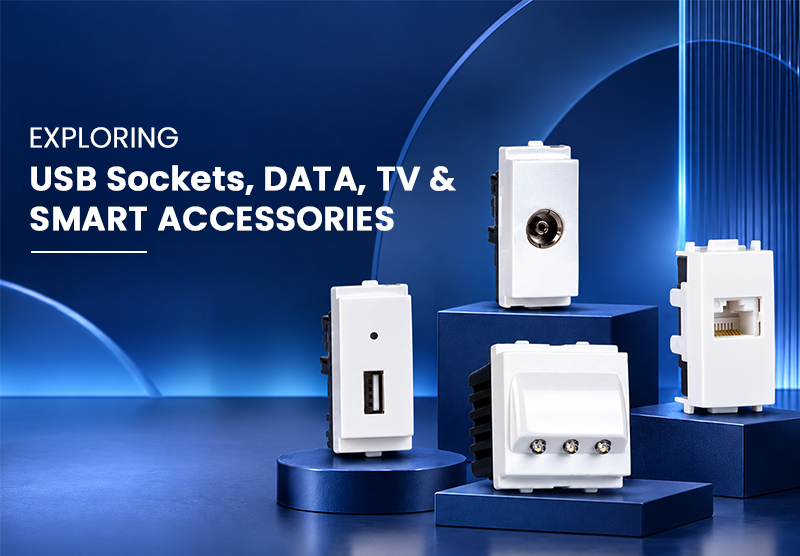
Besides sockets and electrical switches, a range of useful accessories is used to enhance the usability of the modular switchboard. We are listing some of them here for your convenience:
USB Charging Sockets to charge devices without adapters
TV Coaxial Points for all your cable and satellite connections
Internet (RJ45) Ports for stable internet access
Telephone Jacks if you have landline connectivity
Indicator Lights to indicate the power status
MCBs and Electrical Safety in Homes
When we talk of electrical switches, safety is a critical aspect. The traditional system uses fuses and basic breakers to ensure safety. These systems would melt or trip in case of overload. This means that the breaker needed to be replaced after use.
Modern homes could do better with Miniature Circuit Breakers (MCBs), which are much better due to several reasons:
- They automatically trip if there is an overload
- The response time to overload is faster
- They can be reset easily and do not need to be replaced
- They provide better safety and cost savings in the long term.
Buying Tips for Modular Electrical Switches
When we are selecting a modular switchboard, careful thought must be given to the various aspects associated with a switchboard – safety, durability, long-term usability, and of course, design.
Here are some key factors you must consider to make the right choice:
- Opt for ISI-certified products to ensure safety and quality standards are met
Select switches and sockets based on appliance requirements - Decide locations in advance for easy access
- Select a modular system, as it gives you room for upgrades
- Go for high-quality switches as they last longer and perform better
- Stick to one system or brand to avoid safety and compatibility issues.
- Ensure proper earthing to prevent electrical hazards
While electrical switches may seem like an insignificant part of your home, they do have a considerable impact in terms of safety, functionality, and convenience. A smartly planned modular switchboard ensures both optimal functionality and ease of use across your home.
With a clear understanding of the modular switchboard and what goes into assembling one, you can make an informed decision to enhance your interiors and also ensure long-term reliability.
Precision Electricals has a range of certified modular switches, MCBs, and electrical accessories. Check them out here.
FAQ
A modular switch has modern aesthetics and is designed to be part of a modular switchboard with safety in mind. Safety features like covered terminals and improved insulation are integrated into the design. On the other hand, normal switches have a bulkier, older style. Modular switches are easy to install, replace, and upgrade, and are more durable than normal switches. These modern switches can combine multiple functions, while normal switches have basic on/off functionality. Finally, with all the added features, modular switches are more expensive than normal switches.
When choosing a modular switch, it is best to opt for well-known brands and check for ISI certification to ensure safety and quality. You should also consider the type of appliances that you will use and select a suitable current rating. Other factors you may consider are build quality, material, and design.
A 2-pin module switch socket supports lighted appliances, like mobile chargers. It can handle a lighter load and does not have earthing, which is alright for lighter appliances. However, heavier appliances need better safety, and a 3-pin socket offers it. A 3-pin socket can handle the heavier load of large appliances and provide safety with earthing.
A 3-pin 16A socket is suitable for heavy appliances, such as refrigerators and washing machines. It can safely handle higher loads and comes with an earth connection.
Yes, modular switchboards are designed for easy upgrades. You simply need to pick switches from the same brand for compatibility.
Modular switches are much better due to several factors, including ease of installation, safety, modern design, ability to combine multiple functions, and durability. However, they are more expensive compared to non-modular switches.
Related posts
September 30, 2026