

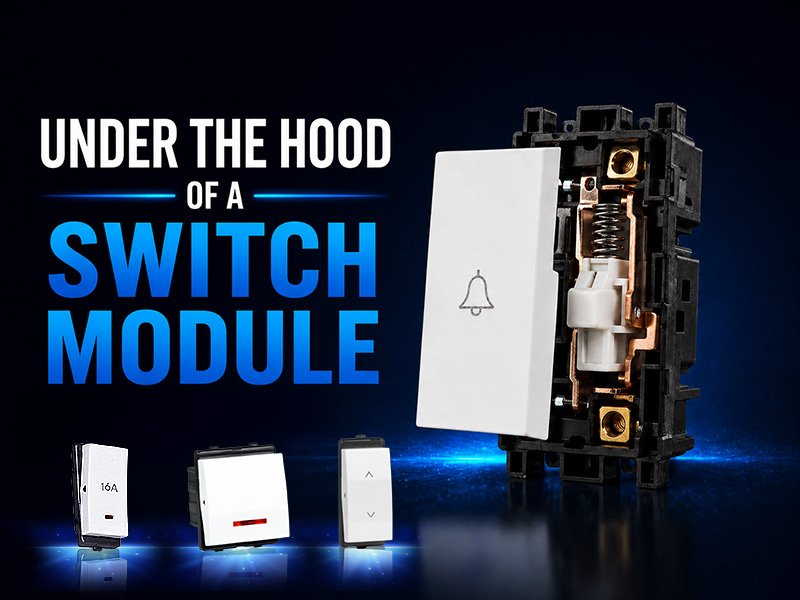



What Is a Switch Module & How Does It Work?
May 13, 2026
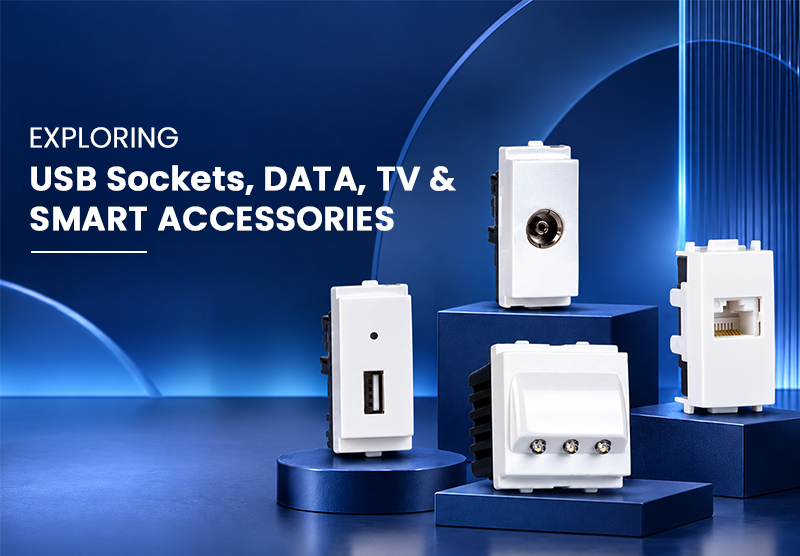
Modular Switch Accessories Explained: USB Sockets, TV Points, Internet & More
September 30, 2026How Regulators & Dimmers Help You Save Energy
Specification decisions on a switchboard have a downstream cost, and few components are as underestimated as fan regulators and dimmer switches.
For electrical contractors, building systems consultants, and building managers dealing with energy audits, energy-saving design rules, or client pressure to trim operating costs, the type of regulator or dimmer listed in the project materials list can affect a building’s electricity bill. That’s why it is important to know how regulators and dimmers help save energy. This guide is designed to help you know just that.
Why Regulators and Dimmers Belong in the Energy Conversation Convesarion
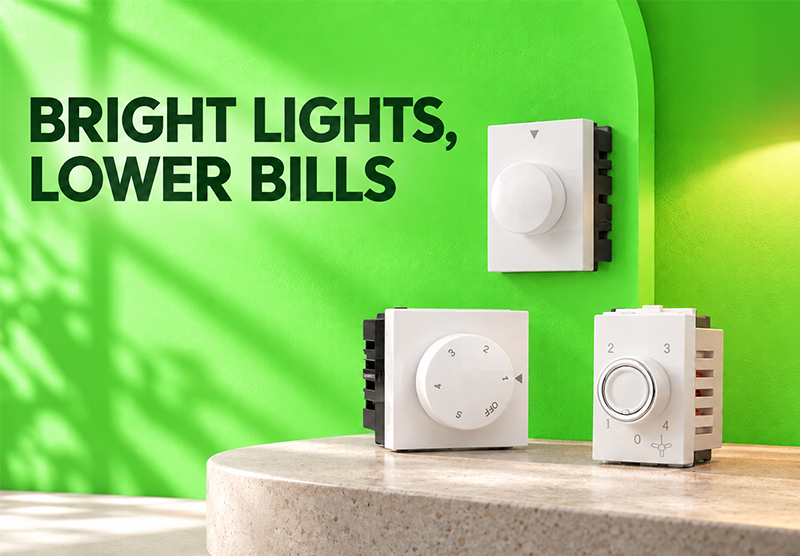
Fans and lights operate for more hours than almost any other electrical load. A dimmer switch or fan regulator is a simple, effective device for controlling how much power actually reaches these loads. For lighting, an LED dimmer switch trims output at the fixture; for fans, a fan speed regulator does the same. Lowering the setting when full brightness or speed is not needed reduces the power drawn by the light or fan. This saves electricity at every point, every day, for the life of the installation. The wrong control mechanism does the opposite, allowing the building to waste energy at every fan and light.
This is why dimmers and regulators appear in energy-efficiency retrofits and in specifications for new-build modular electrical switchesalike. They’re a low-cost control point that gets used constantly.
Step-Type Regulators vs. Electronic Regulators: Which is More Energy Efficient
Step-type (resistive) regulators slow a fan by inserting resistance into the circuit. That resistance turns into heat, so some input power is wasted at lower settings.
Electronic (solid-state) regulators use semiconductor circuitry to modulate voltage or current directly. They avoid resistive heat loss and usually draw less power at reduced speeds.
The same principle applies whether you are choosing a dimmer switch for lights, an LED dimmer switch for LED fittings, a fan regulator or fan speed regulator for fans, or a modular dimmer switch for a new modular switch plate.
For B2B buyers, the point is simple: at the same speed setting, electronic regulators are the more energy-conscious choice, especially at scale. In auditoriums, classrooms, open-plan offices and multi-unit residential blocks, savings add up across dozens or hundreds of points and that cumulative effect shows up on the utility bill.
How do Dimmers Reduce Lighting Load and Extend Fixture Life
Think of a modular dimmer switch as the lighting version of the same idea as that of a fan. Instead of running every fixture at full brightness by default, it lets you dial in just the light you actually need. On a project, that pays off in two ways.
- First, using less power at partial brightness is a big help in lobbies, banquet halls, hospitality interiors, and conference rooms, where lighting needs change throughout the day.
- Second, it puts less stress on your fixtures. When the dimmer and fixture are compatible, running lights below full output can ease wear on the lamps. Facility teams factor that into total cost of ownership.
One thing to watch: not every LED driver and LED dimmer switch play nicely together. A mismatched pairing can cause flicker, buzzing, or shorter lamp life. So it’s worth confirming compatibility at the specification stage, before it becomes a problem later.
Where Regulators and Dimmers Can Be Used
| Spaces | Typical Requirement |
|---|---|
| Corporate offices & co-working spaces | Electronic fan regulators, zoned dimmers for meeting rooms |
| Hospitality (hotels, banquet halls) | Dimmers for ambience control across function spaces |
| Retail & showrooms | Dimming for merchandising zones and display lighting |
| Healthcare facilities | Regulators/dimmers per area-specific lighting protocol, verified against facility engineering requirements |
| Residential developments | Bedroom, living room, and staircase dimmer/regulator points as standard switchboard inclusions |
Precision Electricals’ Series 7 range lists electronic fan regulators and dimmers alongside its modular switch, socket, and MCB modules. These allow a project to standardise on one aesthetic and mounting system across regulator, switch, and socket points on the same plate.
Selecting the Right Regulator or Dimmer
Here are a few specification checkpoints to include in a BOQ review:
- Load type and wattage: Make sure the regulator or dimmer can handle the fan motor or lighting load it’s meant to control. Remember, electronic and LED dimmers won’t always work in place of older incandescent-rated ones.
- Switch configuration: Find out early if a point needs single-location or two-way/multi-location control. This affects both which regulator or dimmer you pick and how you plan the wiring.
- System compatibility: If the project already uses a specific modular switch series, stick to regulators and dimmers from the same range. That keeps plate sizes, module counts, and finishes consistent.
- Manufacturer specification sheets:Always check wattage and load ratings against the manufacturer’s datasheet for the exact model. This covers the manufacturer’s specs only. It does not confirm project-level engineering or local code compliance. Verify those separately with the relevant authority or consultant.
Installation and Maintenance Considerations for Contractors
Electronic regulators and dimmers are usually simple to install in a standard modular switch plate. They follow the same box and module conventions as switches and sockets. We cover this in our complete guide to modular switches.
Modular construction also makes maintenance easier. If a regulator or dimmer module fails, you can replace just that module without disturbing the rest of the switchboard. That keeps downtime at a live site to a minimum.
A Procurement Checklist for B2B Buyers
- Match regulator/dimmer type (step vs. electronic) to the energy-efficiency goals stated in the project brief
- Confirm load ratings against actual connected fan wattage or lighting circuit load
- Verify LED driver and dimmer compatibility before large-scale rollout
- Standardise on one modular switch series across a project for consistent servicing
- Route any code or compliance questions to the relevant local electrical authority or consultant, rather than assuming interchangeability across standards
Conclusion
Regulators and dimmers are small components with an outsized, cumulative effect on a building’s energy profile. For contractors and consultants building out BOQs, and for procurement teams evaluating suppliers, the choice between step-type and electronic control, and the discipline of matching load ratings and system compatibility, is where real, measurable savings get built into a project from day one. Explore Precision Electricals’ modular switch and regulator range to see how these controls fit into a wider switchboard specification, and see our companion piece on modular switch accessories like USB sockets, TV points, and internet jacks for the rest of the switchboard planning picture.
FAQ
Yes, in principle. Step-type regulators reduce fan speed by dissipating excess power as heat through internal resistance, which wastes energy at lower settings. Electronic regulators use solid-state circuitry to modulate power delivery directly, typically drawing less energy at reduced speeds. Actual savings depend on usage patterns, fan load, and the specific product, so it’s worth checking manufacturer specifications for a given model.
Many dimmers can work with LED lighting, but not all LED drivers are dimmer-compatible by default. Mismatches between a dimmer and a non-dimmable LED driver can cause flickering, buzzing, or shortened lamp life. Always confirm dimmer-driver compatibility against the fixture manufacturer’s specifications before installation, especially on larger commercial rollouts.
A step-type regulator uses resistive coils to reduce fan speed in fixed steps, dissipating unused power as heat. An electronic regulator uses semiconductor-based circuitry to smoothly modulate voltage or current to the motor without a resistive heat loss, generally making it the more energy-efficient option at partial speeds.
Energy efficiency requirements can vary by region, project type, and local building codes, and should not be assumed uniform across jurisdictions. Contractors and consultants should verify applicable national, state, or municipal requirements with the relevant authority or their project’s engineering consultant rather than treating manufacturer claims as a substitute for compliance verification.
Start with the connected load, fan wattage or lighting circuit rating, and confirm the regulator or dimmer’s rated capacity matches it. Then check switch configuration needs (single-location vs. multi-location control), LED driver compatibility for dimmers, and whether the product belongs to the same modular switch series already specified for the project, to keep plates and finishes consistent.
In many cases, yes, provided the existing switchboard uses a modular system with compatible plate and module sizing. Retrofits should still be assessed by a qualified electrician to confirm wiring, load capacity, and box compatibility before installation, particularly in older or non-modular switchboards.