

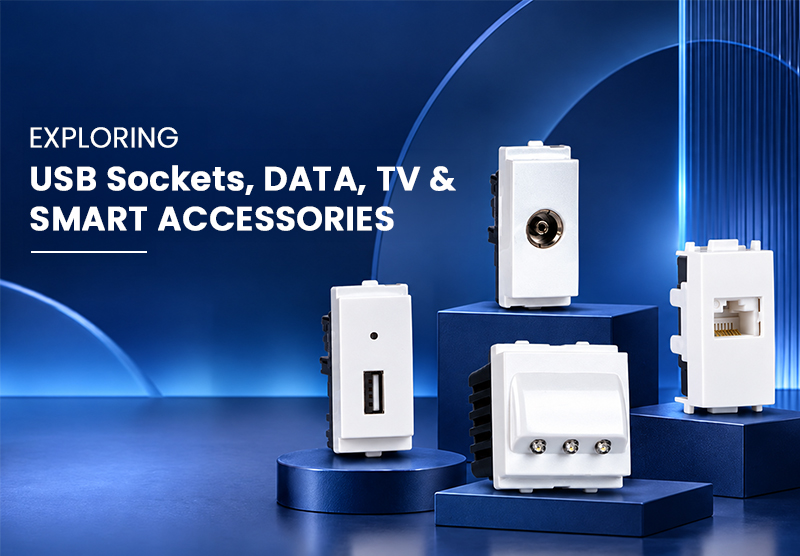


Modular Switch Accessories Explained: USB Sockets, TV Points, Internet & More
September 30, 2026
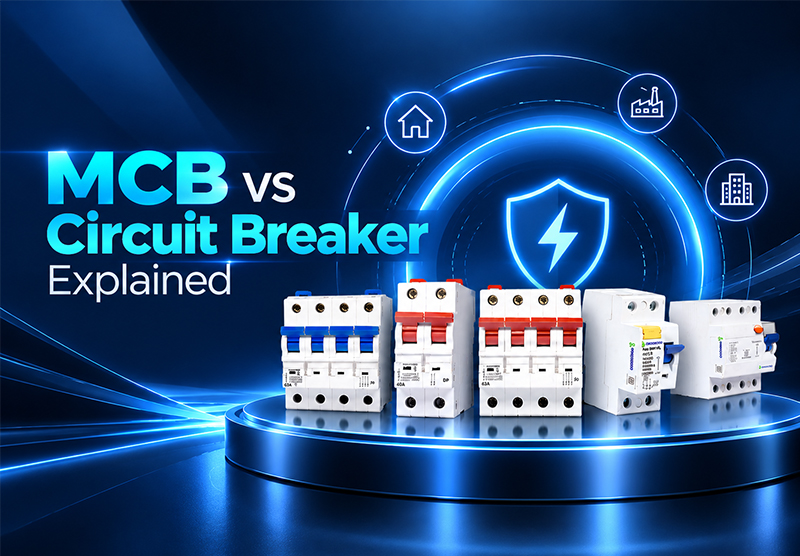
Miniature Circuit Breakers vs Circuit Breakers: Pros & Usage Scenarios
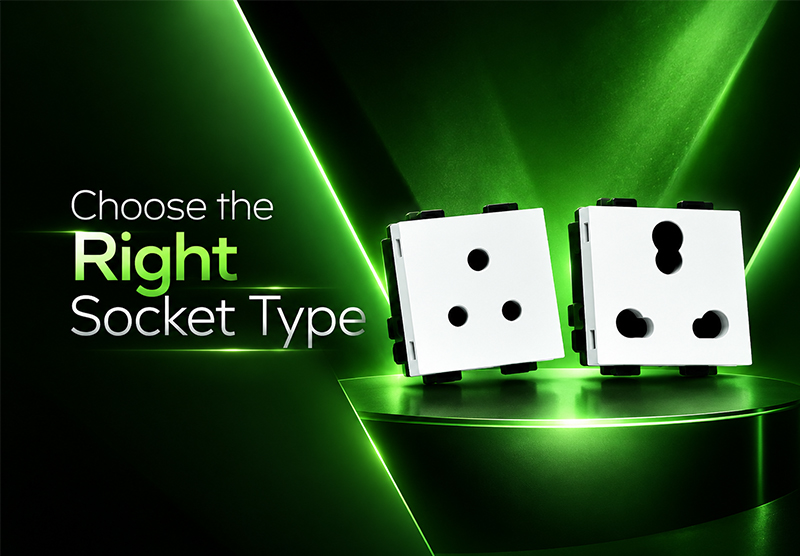
October 30, 2026Modular Socket Outlet Types: How to Choose the Right One for Your Home
Choosing a modular switch socket may seem like a small decision in the middle of a renovation or new-home project. Yet it is one of those details you use every single day. The right socket should do more than look neat on the wall. It should suit the appliance, support safe everyday use, and blend naturally with your interiors. This guide walks you through what to check before buying.
What is a modular switch socket?
A modular switch socket is a socket outlet that fits into a modular electrical system. Instead of using a fixed, all-in-one switchboard, you can combine individual switches, sockets, regulators, and accessories within a common modular switch plate.
This makes it easier to plan a wall exactly the way you need it. For example, one plate can hold a light switch, a fan regulator, and a socket for a table lamp. If your needs change later, individual modules can often be replaced without redoing the entire switchboard.
Start with the appliance and not the design
It is tempting to choose a socket based on colour, finish, or how it looks beside your wall paint. But you’ve got to be wise, and the first question you should always ask when buying a new modular socket is, ‘What will you plug into it?’
Electrical sockets are manufactured with different current capacities to safely match the power requirements of specific appliances. So, before buying your modular switches, make a simple list for each room. You do not want to end up with a switch that can’t handle the load. Here’s an example of what your list should look like.
- Lights and fans
- Chargers, laptops, and small appliances
- Kitchen appliances such as mixers, kettles, and microwaves
- Bathroom appliances such as geysers and hair dryers
- Heavy-duty appliances such as air conditioners or water heaters
This small exercise helps you avoid buying a socket that looks right but is not suitable for the appliance.
Pro Tip: For higher-load appliances, a 16A socket is generally the safer and more appropriate choice.
Understand 6A, 10A, and 16A sockets
Socket ratings can feel confusing at first, but when you look at it closely, it isn’t. A marked rating tells you how much electrical load the socket is designed to handle. Here’s how it reads.
| Socket rating | Best suited for | Typical examples |
|---|---|---|
| 6A socket | Light-duty use | Phone chargers, lamps, small fans, table-top devices |
| 10A socket | General-purpose use | Televisions, computers, small kitchen appliances |
| 16A socket | Higher-load appliances | Air conditioners, geysers, microwaves, room heaters |
For some uses, you may still be unsure which rating your gear needs; in such cases, consult a qualified electrician. It is always better to plan for the appliance’s actual requirement.
Check safety features before buying
Electrical safety is not about creating fear. It is about making sensible choices that protect your family and your home from electrical hazards. A good modular switch socket should include features that support safe daily use. You need to look for:
- Shuttered sockets, which help prevent accidental contact with live parts
- Proper earthing, especially important for metal-bodied appliances
- Heat- and shock-resistant materials, such as quality polycarbonate
- Secure contacts, so plugs fit firmly without becoming loose over time
- Certified products, made to recognised Indian standards
For Indian homes, switches and sockets should conform to relevant standards such as IS 3854 for switches and IS 1293 for plugs and socket outlets. Precision Electricals features electrical accessories made in accordance with these standards.
Match the socket to your modular switch plate
Modular systems are designed around specific plate sizes, module widths, and support accessories. So before purchasing, confirm that the socket is compatible with your chosen modular switch plate and frame. Here are a few practical checks to look out for:
- Does the socket module fit the plate size you have selected?
- Do you need a support plate or mounting accessory?
- Is the finish consistent across switches, sockets, and plates?
- Can you add more modules later if your requirements change?
These checks are especially useful in kitchens, study areas, and bedrooms, where you may want a combination of switches, sockets, USB chargers, or data points on the same wall.
Consider placement and everyday convenience
The best socket is the one placed where you actually need it so it is important to think about how you use each room before finalising positions.
For example, in a bedroom, you may want sockets near the bedside for chargers and lamps. In a living room, plan for the television unit, Wi-Fi router, and occasional vacuum cleaner. In a kitchen, place sockets away from direct water exposure and where appliances can be used comfortably. In a bathroom, sockets should be positioned carefully and installed with appropriate protection for damp areas.
Remember that good placement reduces the need for extension boards and makes daily routines easier. It also keeps cables tidier and helps your walls look less cluttered so do not ignore this consideration while looking for new modular switch sockets.
A simple room-by-room selection guide
This quick guide can help you plan the basics.
| Room | What to plan for |
|---|---|
| Living room | TV, set-top box, Wi-Fi router, lamps, charging points, and occasional cleaning appliances |
| Bedroom | Bedside charging, lamps, fans, and space for a laptop or small appliance |
| Kitchen | Mixer, kettle, microwave, chimney, and other appliances; use appropriate ratings for heavier loads |
| Bathroom | Geyser and other appliances, with careful placement and professional installation |
| Study or home office | Computer, printer, monitor, charger, and network points |
| Balcony or outdoor area | Weather-appropriate planning and professional advice for exposed locations |
For rooms with high-power appliances, plan the socket rating, wiring, and circuit protection together. A socket alone cannot make an unsuitable circuit safe.
What to ask before installation
Before your electrician installs a modular switch socket, it helps to ask a few straightforward questions:
- Is this socket rating suitable for the appliance I plan to use? It is important to understand that the protective device on the circuit is just as important as the socket rating itself. Our guide to Miniature Circuit Breakers vs Circuit Breakers: Pros & Usage Scenarios explains which breaker type suits which load.
- Is the wiring and earthing adequate for this location?
- Does the wall box have enough depth for the modular system?
- Are the socket, plate, frame, and support accessories from a compatible range?
- Is the installation secure, properly earthed, and tested before use?
A qualified electrician can check these details quickly and help you avoid costly changes later. Installation is not the place to compromise, particularly in kitchens, bathrooms, and areas near water.
Common mistakes to avoid
Many socket-related problems come from small planning gaps rather than major electrical faults. Here are a few mistakes worth avoiding:
- Using a low-rating socket for a high-power appliance
- Buying sockets without checking compatibility with the switch plate
- Placing sockets where they will be blocked by furniture
- Ignoring earthing or circuit protection
- Choosing design over safety in kitchens and bathrooms
- Mixing incompatible modular components
- Waiting until after plastering or painting to finalise socket positions
A little planning at the start can save you from extension cords, awkward wall positions, and unnecessary rework later.
Conclusion
A modular switch socket is a small part of your home, but it plays a big role in everyday comfort and safety. Choose it based on the appliance, check the rating, confirm compatibility with your modular switch plate, and make sure installation is handled properly.
If you are building or renovating, take a little time to map out each room before buying. The right combination of modular switches and sockets will make your home more convenient today and easier to adapt in the years ahead.
Explore Precision Electricals’ modular switch and socket ranges to find options that suit different room requirements, load needs, and interior styles. And for a wider look at modular electrical socket types for home projects, including switches, uses, and buying tips, read our complete guide to modular switches.
FAQ
Choose based on the appliance’s rated current and the circuit’s capacity. Use a 6A socket for lower-load devices. Use a 16A socket for higher-current appliances. A 6/16A socket accepts both plug types in one outlet.
A standard 3 pin socket takes a plug with a matching current rating, usually 6A or 16A. A 3+3 pin socket, or combined 6/16A socket, takes both 6A and 16A Indian 3-pin plugs in the same wall space, giving you more flexibility.
Adapters can be useful once in a while, but poor-quality, damaged, or overloaded adapters can cause loose connections, overheating, and fire risks. For high-load appliances, install the right socket and ask a qualified electrician to check the circuit.
Look for child-safe shutters, flame-retardant materials, secure terminals, good insulation, and reliable earthing. The socket should also be installed on a circuit with the right protection.
Yes, compatible modular systems can often combine switches, power sockets, USB modules, and data ports on one grid plate. For the best fit, finish, warranty support, and future compatibility, use modules from the same manufacturer and system.